kim dankoor

US Elections 2016: a media consumer’s handbook

  1. Separate facts from opinions. For example, during Michelle Obama’s speech at the Democratic National Convention, she mentioned that the White House was built by slaves. Some media outlets reported that this wasn’t true. The website politfact.com investigated Michelle Obama’s statement. Read in this article why Mrs. Obama is right.
  2. Compare multiple media sources.
  3. Language is important. Pay attention to the language the reporter uses. Think about how terms like Crooked Hillary and Dump Trump influence the debate.
  4. Investigate the owners (and editors in chief) of the media outlets. Do they vote? And for which candidate? What government rules and regulations benefit the owner of the media outlet? Do they have a ‘relationship’ with people from a political party? etc.
  5. Realize that different techniques are used to get your attention and that the stories are carefully crafted. Some media outlets purposely show parts of a political event to sell a story. For instance, some media will only show empty seats to confirm that the candidate/speaker is not popular. Other media might focus (more) on angry protesters to paint a certain picture of the candidate’s following.

election-2016-us-400x225

KIM geeft workshops ‘interviewtechnieken’ op het Globe college

Van 27 tot en met 29 juni heeft Kim Dankoor workshops ‘interviewtechnieken’ gegeven aan tweedejaars studenten van het Globe college.  De leerlingen waren nieuwsgierig, maatschappijkritisch en een tikkeltje bijdehand; de ideale mix voor KIM ;)! De studenten hebben mensen geïnterviewd over de aanslagen in Istanbul, de Amerikaanse presidentsverkiezingen, religie, EK voetbal 2016 en de ‘ideale’ man/vrouw.

Het waren leuke dagen, journalisten in spe! Tot de volgende keer!

globe

Vloggers team KIM op tv!

De deelnemers van KIM’s mediaworkshops in speeltuin de Bloesem hebben meegewerkt aan een item voor het kinderprogramma NooN. Siebe, Dato, Marnix en Giulia vertellen waarover zij vloggen en wat zij tot nu toe hebben geleerd. Kim Dankoor was die dag helaas niet aanwezig. Je kan wel een glimpje opvangen van haar collega’s die in speeltuin de Albatros hetzelfde project uitvoeren! Het item komt in de uitzendingen van 8 juni (woensdagavond op UStad) en 10 juni (vrijdagochtend op RTV Utrecht).

Zie hier alvast een voorproefje:

Solutions journalism en Lil Kims controversiële selfies

Sinds een aantal jaren doe ik onderzoek naar de wijze waarop representaties van schoonheid, romantische relaties en gedrag in commerciële rapmuziekvideo’s jongeren beïnvloeden. In de laatste week van april postte Lil Kim, de queen of rap, een paar selfies op haar Instagram account. Hoogstwaarschijnlijk wist zij toen niet dat die foto’s het nieuws zouden domineren. Een paar dagen na Lil Kims Instagram post bracht queen of pop Beyonce het album Lemonade uit; een ode aan de magistrale zwarte vrouw. Lil Kims selfiereeks is de anti Lemonade.

Belichting, make – up contouring, photoshop en fotofilters kunnen een huidskleurtint behoorlijk doen veranderen, maar het gros van de mensen denkt dat Lil Kim haar huid (nog meer) heeft gebleekt. Racisme, sexisme, kleurisme, kapitalisme…..verscheidene journalisten hebben artikelen gewijd aan de relatie tussen die systemen en onzekerheden bij donkergekleurde mannen en vrouwen in Azië, Afrika, Zuid-Amerika, de Caraïben en in het Westen. In mijn artikel I woke up like this ga ik daar ook iets dieper op in. In deze korte blog wil ik vooral solutions journalism bedrijven; trachten oplossingen voor dit probleem aan te dragen en aan lezers vragen om ook hun inzichten te delen.

lilkim                                                                              Foto: Lil Kims Instagram selfies

Lil Kim vertelde ooit in een interview dat zij zich nooit mooi zal voelen. Zij dacht dat zij een ‘gewone, standaard’ donkere vrouw uit Bed-Stuy was. Haar partners gingen vreemd met meer Europees uitziende vrouwen en haar vader noemde haar lelijk. Tel daarbij op de eenzijdige beelden van schoonheid in Hollywood en commerciële rapmuziekvideo’s en je krijgt de pijn van Lil Kim. De pijn die heeft geleid tot gelaatscorrecties, neuscorrecties en borst-, heup- en bilvergrotingen.

De mogelijke oplossingen beschrijf ik aan de hand van de drie dimensies van de post- Cultural Studies benadering: 1) de mediatekst (films, series, reclames, muziekvideo’s etc.) 2) de political economy (productie) en 3) het publiek (Kellner, 2001). Ten eerste, ik pleit voor meer diversiteit in de representatie van schoonheid. Dit betekent onder andere meer donkergekleurde vrouwen die de rol vervullen van droomvrouw/trofee vrouw in plaats van ‘beste vriendin’ van de dreamgirl of de pittige collega. In de jaren 90 zag je, naast licht tot mediumgetinte, ook meer donkergetinte vrouwen in commerciële rap muziekvideo’s. De verdere vercommercialisering zou een oorzaak kunnen zijn van de verschuiving. Hip Hop moet nog een grotere groep bereiken, dus de vrouwen in de muziekvideo’s dienen de illusie te wekken dat ze van alles en nog wat kunnen zijn: Latina, wit, Aziatisch, donker gemixt met andere etniciteiten etc.) .

Read and Share More»

Kim als mediacoach voor het UP project (Utrecht)

De komende maanden coacht Kim Dankoor het UP reportersteam in Utrecht Zuid. De mediatalenten Dato, Gaia, Giulia, Jiannis, Marnix, Owen, Siebe, Tijn en Rhijn zullen iedere week vloggen voor speeltuin de Bloesem. De kinderen en bewoners willen dat de Bloesem een plek voor iedereen wordt, waar ze samen op Vreedzame wijze zorgdragen voor de spullen, de dieren en elkaar. De razende reporters zullen o.a vloggen over participatie in de wijk, democratie en talenten van jonge en oude(re) buurtbewoners. In hun eerste vlogs laten de reporters zien wat hun favoriete plekken zijn in de speeltuin. Houd website de Bloesem goed in de gaten, elke week wordt er weer wat nieuws geplaatst!


images-5


Interview met Kim Dankoor: religieuze stereotypen in de media

Interviewer: Martijn Bastianen (FHJ onderzoeksredactie)

“Nu word je als Moslim hier in Nederland ook gewezen op de fouten die Islamitische Staat in Irak en Syrië maakt, terwijl je zelf onschuldig bent. Het gebeurt steeds vaker dat mensen op straat, of waar dan ook , mij en andere Moslims over één kam scheren. Dan zie je pas echt wat er gebeurt als media negatieve berichten publiceren over je geloof en je moskee.” (Orhun Gur, penningmeester ISN Oss Ulu Moskee)

Volgens Kim Dankoor, mediadeskundige, is de framing van Moslims in Nederlandse media de oorzaak voor de kritische houding van Moslims naar media toe. “De diversiteit binnen de moslimgemeenschap wordt te weinig geportretteerd”. Die diversiteit mist Dankoor bij zowel populaire media als bij nieuwsmedia. “Moslims zijn meer dan alleen hun religie, het zijn vrouwen en mannen, die net als jij en ik, dromen over een bepaalde carrière, liefdespartner en vriendschappen. Ik zou graag meer karakters in populaire media (films en series) willen zien die omgaan met deze universele thema’s. Religie is dan secundair.”  Dankoor haalt tevens de nieuwsmedia aan. Ze vergelijkt de wijze waarop Moslims worden neergezet in de media met de manier waarop mensen met andere geloofsovertuigingen worden afgebeeld. “Wanneer media rapporteren over Christelijke terroristen merk ik op dat  hun religie vrijwel nooit noemenswaardig wordt bevonden, denk aan Dylann Roof en Anders Breivik. Bij Islamitische terroristen is hun religie bijna altijd een belangrijk gegeven.”

Portrait of a boy with the map of the world painted on his face.

Read and Share More»

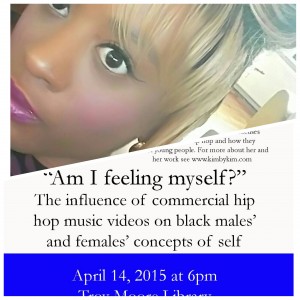
Am I feeling myself? Rap music videos’ influence on adolescents’ concepts of self.

A few media studies have investigated cognitive processes of involvement with characters in rap music videos. The retentional process of parasocial interaction (when you feel you have a social relationship with the music artists similar to that of a friend, peer of counselor) is a necessary component of fandom (Kistler & Lee, 2009). Among the male participants in Kistler and Lee’s (2009) research, Hip Hop fandom was shown to be a significant predicator of objectification of women. Long-term exposure to rap music videos by fans may reinforce traditional gender attitudes and cause distorted sexual norms. The academic work of Ward et al. (2005) illustrates how the retentional process of wishful identification (Hoffner & Buchanan, 2005; Kistler & Lee, 2009; Kistler et al., 2010) influence adolescents’ mate selection beliefs. Black adolescents who found rap music videos entertaining and identified with rap artists in a ‘desire to be like the artist’ kind of way, endorsed the sexual stereotypes in rap music videos. In addition, they thought that characteristics like being rich, attractive, cool and athletic are more important in men and women than being intelligent, nice or funny.

The images in current commercial rap music videos promote sex and materialism. This study will explore how and to what extent social comparison processes and cognitive processes influence the effects of commercial rap music videos on Black adolescents’ concepts of self. This study will address the following research questions:

  1. How and to what extent does consumption of commercial rap music videos, mediated through the cognitive process of involvement, influence the concepts of self of Black late male adolescents?
  2. How and to what extent does consumption of commercial rap music videos, mediated through the cognitive process of involvement, influence the concepts of self of Black late female adolescents?

[8569  more words]

photogrid_1452200270709


Social Media Do’s en Dont’s

Op 30 oktober 2015 was Kim Dankoor te gast bij het radioprogramma Dichtbij Nederland (radio 5). De onderwerpen social media, journalistiek en beeldvorming stonden centraal. Naar aanleiding van het interview heeft Kim een aantal social media DO’s en DONT’S geformuleerd:

DO’S

  • Vertel jouw eigen verhaal op social media. Als burger(journalist) hoef je niet meer te wachten op die ene kans bij die ene redactie in Hilversum. Schrijf artikelen, interview mensen, maak issues en oplossingen, die je niet in mainstream media terug ziet, zichtbaar.
  • Gebruik social media om traditionele media uit te dagen. Vind je een media uiting (film, serie, reclame)  te ‘stereotypisch’? Of vind je dat een journalist een te eenzijdig beeld schetst van het nieuws? Laat het weten middels een #trendingtopic of een directe tweet naar de producent.
  • Social media zijn goede platformen om je te profileren. Of je nou ambities hebt op het gebied van journalistiek, politiek, economie, recht of entertainment. Maak optimaal gebruik van deze gratis platformen!

DON’TS

  • Neem de informatie die je op social media vindt niet klakkeloos over.  Heeft iemand een artikel geschreven over een bepaalde kwestie? Check dan altijd de bronnen die de schrijver heeft gebruikt, eventuele verwijzingen in de tekst en kopieer desnoods stukken tekst in de Google zoekbalk (misschien heeft de schrijver geen bronnen vermeld).
  • Realiseer je dat alles wat jij op social media post zichtbaar is voor iedereen. Past de manier waarop jij je online profileert niet bij de cultuur van een bedrijf waar je op dat moment solliciteert? Vraag jezelf dan af hoe graag je die baan wilt of wijzig, indien nodig, jouw online presentatie.
  • Realiseer je dat de meeste mensen een ideale virtuele identiteit construeren. Geen reden om neerslachtig te worden als je het ‘perfecte leventje’ van andere mensen op jouw tijdlijn voorbij ziet komen.

Deel gerust deze tips en de link naar het interview op social media ; ).

Klik hier om de uitzending te beluisteren.


photogrid_1446315407432

Thanks for having me, Dichtbij Nederland!


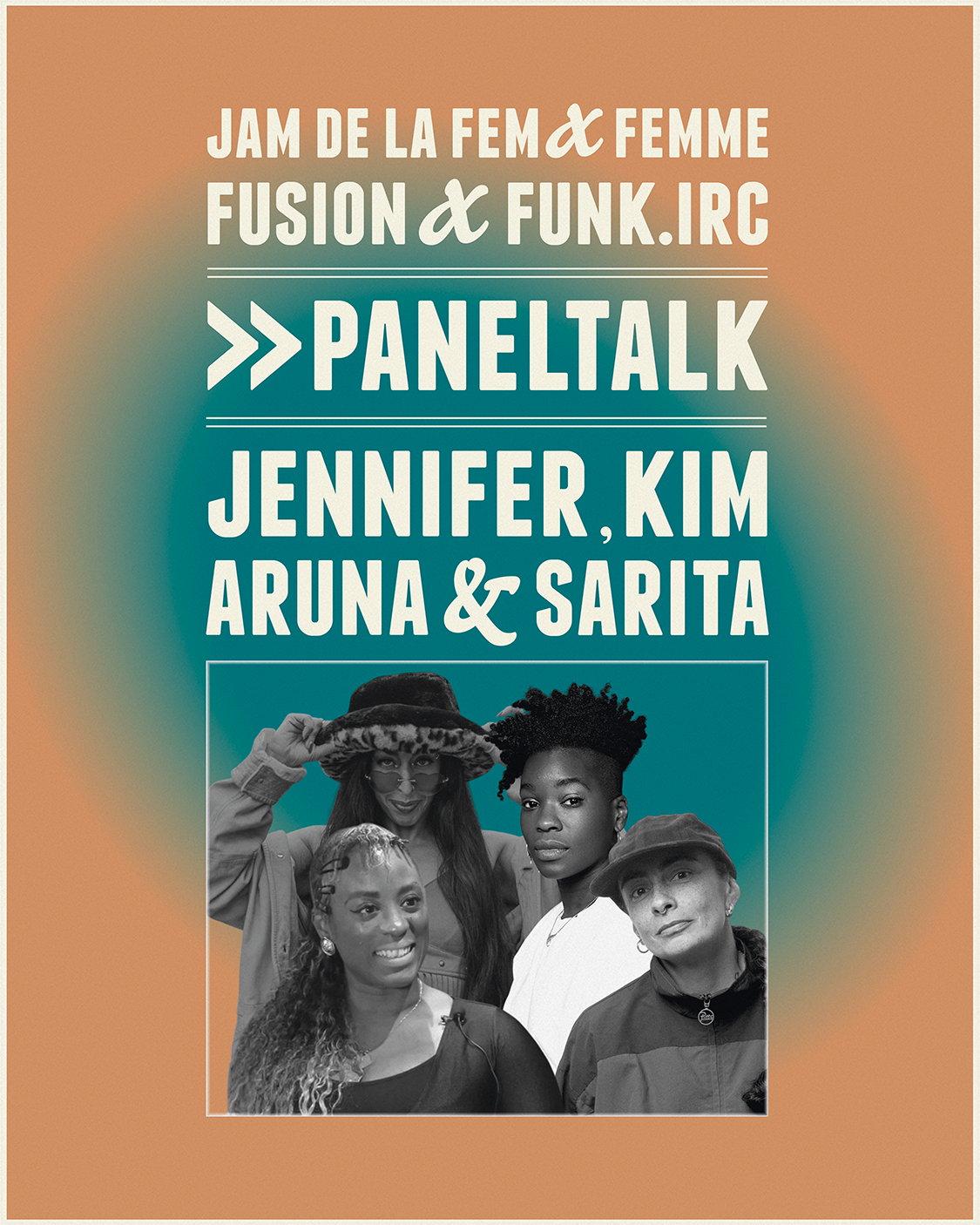
Kim leidt speak up debat in Amsterdam Zuid

Op  donderdag 12 november gaat Kim Dankoor met jongeren in gesprek over discriminatie en vooroordelen. Kan je jezelf zijn in deze maatschappij? En discrimineer jij weleens?

Plaats: Ostade theater, Amsterdam Zuid

Tijd: 18.00 uur tot 19.30

Organisatie: COC Amsterdam

speak-up-2013-photo

Update: Kort verslag over het Speak Up debat in de nieuwsbrief van de Gemeente Amsterdam

Interview Kim Dankoor: A New Social Entrepreneur

Krista Kleinwort, Cultural Representative and Master student at Wilfrid Laurier University (Canada), interviewed Kim Dankoor for her academic Assignment ‘Social Entrepreneurs’.  Read the interview if you want to know what drives Kim and why she chose Social Entrepreneurship.
Thank you, Krista! I will keep it moving ;). 

Social Entrepreneur

Understanding the impact of media on consumers and awareness amongst media producers of the effects of their products impact has become Kim Dankoor’s focus. During her Master’s year of study at Erasmus University in Rotterdam, The Netherlands she increasingly recognized the chronic stigmatization and discrimination in media and was drawn to combine her work as a journalist with her growing understanding of the impact of media messages on consumers. She began with teaching media literacy to students after graduation. Recognizing the need for increased awareness about the messages in current media, she then created KIM (Kritische Inzichten op het gebied van Media or K(C)ritical Insights regarding Media). KIM’s main key activity is the use of “a two-way strategy: use media to make people aware of the possible influence of media (write articles, make short films, use diverse imagery as an editor/journalist and inspire my media colleagues) and create awareness among the audience about the possible influence of media” (Dankoor, 2015, personal correspondence).  As the author of documentaries, interviews and her own website, Kim moved recently to Atlanta, Georgia to pursue studies at Georgia State University. She is researching the impact of hip hop music videos on men as well as women’s self-concepts with particular emphasis on quantifying how hip hop music impacts consumers self-concept of physical attractiveness and romantic appeal (Dankoor, 2015, personal correspondence).

cdy9-snumaazpso

The business of KIM, or the activities undertaken by Kim Dankoor to address the problem of stigmatization and discrimination in the media can be clearly articulated via the Social Business Model Canvas. KIM has two main users or customers: media producers and media consumers.

Read and Share More»

Do you already know movie director/drawer Mohamed Touahria?

For one of his projects, Mohamed Touahria, drew a painting of Kim. Mohamed is a passionate movie director and drawer from Djelfa, Algeria. This 22 year old force to be reckoned with, knew how to draw an exciting story by the age of 10. He has directed two short movies which launched his career as a professional movie maker. 

Want to see more of his work? Go to Mohamed’s Youtube channel !

Me :):

11874637_874423982642332_1483008759_o 11862898_874692502615480_2026113556_o223

Other work:

11267456_873291122755618_1547614858_o 11872957_873505836067480_1855131187_n

KIM’s mediatrajecten in Utrecht

KIM geeft de komende 6 weken mediaworkshops aan kinderen (8-12 jaar) in Utrecht Kanaleneiland en Utrecht Overvecht. De jonge talenten verzamelen de mooiste verhalen over hun buurt. Elke week worden er krantjes en vlogs geproduceerd over een specifiek onderwerp, variërend van ‘respect voor buurtbewoners’ tot ‘kunst in de wijk’.

Nieuwsgierig geworden? Kijk dan de eerste vlog van de razende reporters van de Werkplaats (Kanaleneiland). Deze vlog wordt ook vertoond tijdens een expositie in het stadskantoor in Utrecht.

Kleur in het tijdschriftenlandschap

Ciana Mayam, (voormalig) student Media, Informatie & Communicatie, heeft voor haar afstudeeropdracht een achtergrondartikel geschreven voor het mediaplatform KIM. De resultaten van haar onderzoek ‘kleur in het tijdschriftenlandschap’ zijn in het artikel verwerkt. Voor felicitaties inzake haar afstuderen; ) en/of verdere informatie over haar onderzoek kun je contact opnemen met Ciana via het e-mailadres cnmayam@live.nl. 

Nederland is een multicultureel land, maar dit zie je niet terug op de covers van glossy tijdschriften. De Nederlandse bladenmakers plaatsen hoofdzakelijk ‘witte’ modellen op de voorpagina, ‘zwarte’ vrouwen worden zelden op glossy covers afgebeeld. Dit zou komen door een ongeschreven regel op de redacties: “een zwart model op de cover verkoopt niet”. Maar welke verklaringen zijn hieraan te geven?

In 1970 plaatste Libelle als eerste Nederlandse titel een zwart fotomodel op de cover. Dat toonde zondermeer lef in die jaren. De multiculturele samenleving was toen nog geen begrip en daarbij zou ‘zwart’ op de cover niet verkopen. Vandaag de dag behoort één op de vijf bewoners tot de allochtone bevolking. Alhoewel het straatbeeld verkleurt, blijft de mode helaas achter. Zo worden zwarte vrouwen zelden op de cover geplaatst en gaat de redactionele voorkeur uit naar witte, vooral blonde, modellen. Ciana Mayam verdiepte zich in het coverbeleid van Nederlandse redacties en voerde een onderzoek uit. Ze interviewde fashion professionals, journalisten en stylisten, deed literatuurstudie en hield paneldiscussies onder witte en zwarte lezeressen van glossy’s. Uit haar research is duidelijk geworden in hoeverre de lezeressen hun keuze voor een glossy tijdschrift baseren op de huidskleur van het covermodel.

Read and Share More»

An event where academics and fashion come together!

1

gjm-kim-dankoor-event

Live tweet 29 april:

The brilliant @KIM_BYKIM analyzes gender differences of objectification as a guest speaker @agnesscott

dankoor-talk-flyer-page-001


A few pictures of the successful evening:


collage_20150427-202234


Guest on the radioshow Hip Hop Speakz Atlanta

On March 27th 2015, Kim Dankoor will be a guest on the radio show ‘Hip Hop Speakz’. Hip Hop Speakz is a music/ talk radio program dedicated to bridging the gap between Hip Hop and Politics. Kim Dankoor will talk about her research at Georgia State University (commercial Hip Hop music videos and  concepts of self), her short film “Global Dialogues about Hip Hop culture’ and her media literacy educational programs.

11138510_797742530309809_5933393408672799937_n

Kim gives a -nine week- media literacy course (Clarkston Community Center, Atlanta)

During a -nine week- media literacy course, Kim Dankoor will teach middle school students how to think critically about the representations of social groups in the media and how they can produce their own media texts (videos, radio segments and articles). Insightful discussions, bold interviews and untold stories characterize the media literacy workshops of KIM.

Middle school students will:

  • Improve their reading, writing and speaking skills
  • Improve their computer skills
  • Improve their teamwork skills

Every monday and wednesday from 4.30 pm to 6.30 pm, Clarkston Community Center Computer Lab.  3701 College Avenue, Clarkston, GA 30021. Phone number: 404 508 1050. 


img_20150318_180345_copy

VIDEO! Global dialogues about Hip Hop culture: Amsterdam x Atlanta

In this video KIM explores people’s views of Hip Hop Culture from a global lens. KIM asked people in Amsterdam to formulate one question for people in Atlanta; the Atlanta participants answered and they each formulated one question for the people in Amsterdam, subsequently, the Amsterdam participants answered their questions. Different aspects of Hip Hop culture are being discussed in the video; the good, the bad and the ugly sides.

Please press the ‘fullscreen button’ for a fullscreen view.

This innovative media-project is part of KIM’s empirical research. KIM is in Atlanta to investigate how the images in Commercial Hip Hop Music Videos influence late adolescents’ concepts of self (physical attractiveness, romantic appeal and behavior). Although the participants in the video didn’t solely ask questions about the images in Hip Hop Culture, a lot of the answers will spark the debate on Hip Hop culture as a powerful global force……..discussion topics for days;)……KIM will use parts of this clip for her talks at Georgia State University ( African-American studies department) and other venues.

Kim as a guest speaker in the Talented and Gifted Young Women class (Woodruff Library, Atlanta)

On February 4th, Kim Dankoor was a guest speaker in Dr. Evans ‘Talented and Gifted Young Women’ class. Kim talked about the representations of women and people of color in Dutch media, her Master’s research on how girls in the Netherlands and in America give meaning to the images in commercial Hip Hop music videos and her current research on Hip Hop images and late adolescents’ concepts of self.

“Kim spoke with the young women in my Atlanta Public Schools Research Internship course and my Maya Angelou course, and it was a very enlightening experience” (Dr. Evans, Clark Atlanta University).

20150204_165233_resized_edit

KIM inspires and informs the listeners of fashion confab

Fashion Confab is a weekly podcast where we have conversations with the icons and trailblazers of the fashion industry. We profile the leaders in the fashion industry to inspire and inform our listeners. We want to reveal a portrait of our guests that exposes their creative spirit.  We delve beneath the surface to look at what motivates them, what excites them, what makes them relevant and what led to their success.  Please tune in to be informed and inspired by the most influential people in fashion today.

Kim Dankoor inspires critical thinking about the political, social, and cultural influence of media and uses, among other things, FASHION to do that. She also has a vintage fashion line and wants to – ‘vintagize’ – Atlanta.  Her t-shirt line quote “It’s Hard To Be What You Hardly See” was created to emphasize the importance of role models from diverse backgrounds.

Update: Unfortunately, the radio show Fashion Confab no longer exist. I re-uploaded my radio interview for the people who want to know why I do what I do.


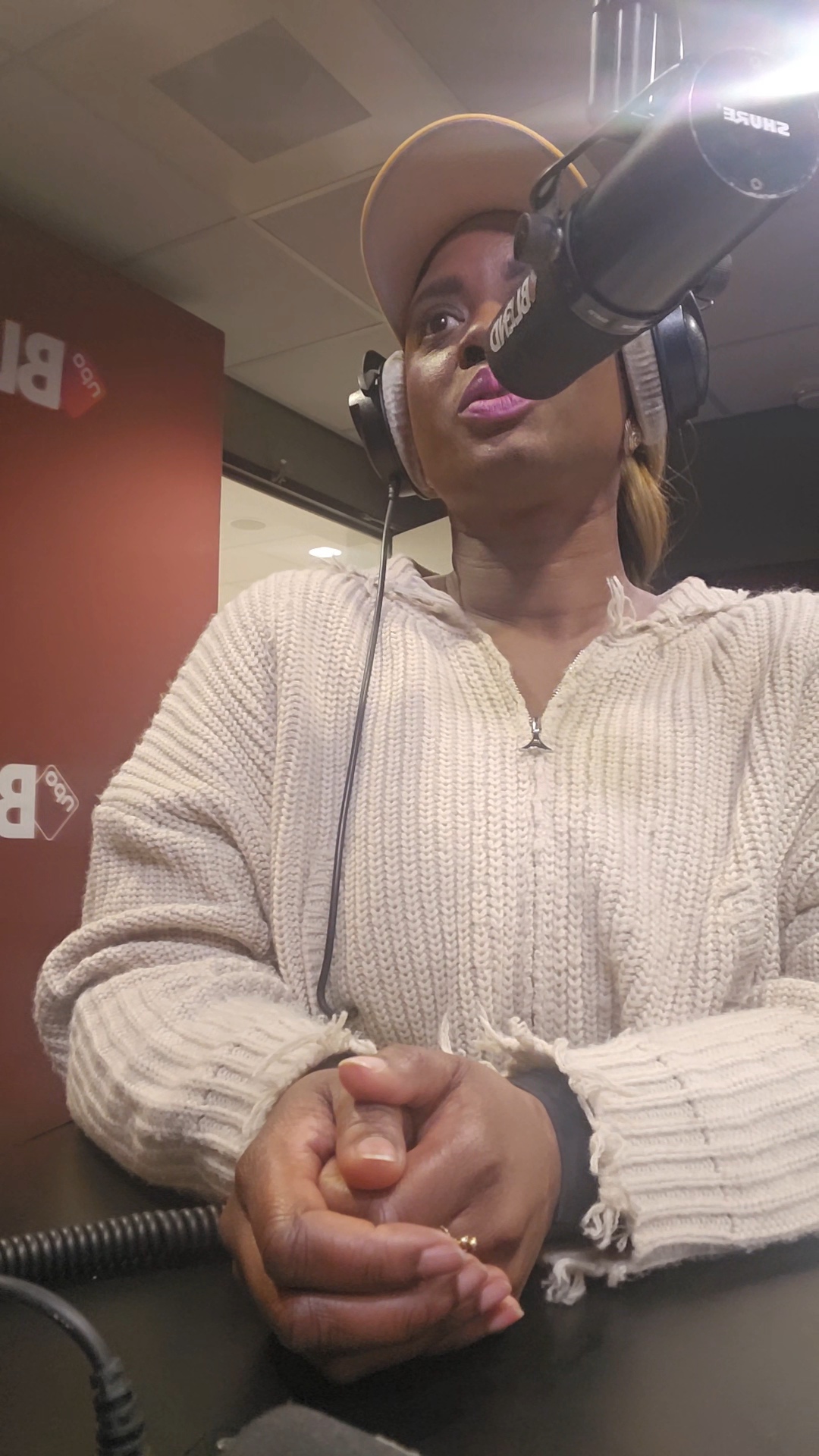
Guest on the CBS radioshow Real talk with rashad richey

I enjoyed being a guest on the radioshow ‘Real Talk with Rashad Richey’! Missed it? You can listen to the rerun at 10 pm (January, 5th). Go to www.radio.com and search for 1380 WAOK News and Talk, CBS ATLANTA. I talked about my company KIM and my research on how the images in hip hop music videos influence the self – concepts of adolescents in Atlanta.


images-8

KIM te gast bij blogtalkradio Atlanta

Prosperity Wednesday w/host Sister El Special Guest Kim Dankoor

Today we will discuss Health, Wealth, Business and Prosperity.  Your Hostess Siste El will interview Special Guest Kim Dankoor.  Kim Dankoor is a Dutch Writer/Journalist on an international mission to inspire Media Producers to consider the potential influence of their works and create awareness among audiences about the social, politial, and cultural impact of media in their lives.

Tune in November 19th 11.30 am! Blogtalkradio show with special guest Kim Dankoor.


Kim als mediadeskundige in volzin (magazine voor religie en samenleving)

Veel jonge moslims laten zich religieus inspireren op het internet. In het juni nummer van Volzin. Magazine belicht KIM waarom het voor jongeren belangrijk is om ‘internetwijs’ te zijn. “De virtuele wereld heeft veel invloed, soms zelfs meer dan traditionele opvoeders zoals ouders en school” (Kim Dankoor).

Klik hier voor het artikel Dutch Hijabi weet raad.  

download-10

Get your KIM on: 6 easy tips for becoming a critical viewer of the media

  • MESSAGE Realize that all media messages and images are constructions. Media makers choose the visuals, the text, the layout, the language and their perspective to tell a story. Try to deconstruct the underlying message of the text (advertisement, movie, TV show, written article, news broadcast etc.): What does the text encourage you to believe? What ideas are being normalized? For example, a make-over reality show like Plain Jane has the underlying message that all women want to attract men.  Those who are shy about pursuing the man of their dreams just need a dress, some makeup, and some self-esteem exercises to capture their secret crush.
  • APPEARANCE Look closely at the appearance of media images: the people who are being portrayed and the roles they play, the editing, the camera angles, the music and the colours. What storytelling devices are used to get you to buy into the main narrative of the text?
  • IMPACT Ask yourself how the media text might affect people who engage with it. How do you feel and how will other people – with diverse backgrounds – feel after reading that news article, watching  that TV show or looking at that advertising.
  • IT’S HARD TO BE WHAT YOU HARDLY SEE Think about the messages and images that you don’t see frequently in mainstream media. What other stories about people and the world exist than those you see in the media? What kind of portrayals of people with diverse backgrounds (sex, gender, class, ethnicity, sexual orientation, age, physical ability/health status) do you miss in mainstream media?
  • INFORMATION SOURCE  To be a truly informed citizen, you need to turn to multiple print, broadcast and online news sources. Never rely on one source of information. Also investigate which corporation owns the newspapers, radio stations, news stations etc. you encounter. How does the ownership structure of media affect the news and entertainment you receive?
  • KEEP ENJOYING MEDIA Being a critical media viewer doesn’t mean you can’t enjoy your favourite tv show, film, music video, magazine etc. I also have my guilty pleasures;). Discuss any form of critic regarding messages or images with people in your environment and/or express your concern to the creators of the text. And never forget that media, at its best, can open the minds of viewers.

Kim als moderator op de Lesbian Media Awards 2014

lesbian2

(Fast)food for thoughts: nieuwe comedyseries contesteren de stereotypen van de Aziatische man

Aziatische mannen worden structureel onder-gerepresenteerd in populaire media. De representaties van de Aziatische man die wel in de media verschijnen, zijn meestal stereotypisch van aard. Dit gebrek aan diversiteit heeft sociologische implicaties, maar het zorgt ook voor saaie media uitingen. Het is namelijk saai om constant dezelfde portretten te zien, zoals de kung-fu meester, de gevaarlijke ‘thug’ (schurk), de introverte/stille man oftewel meneer sfeerkiller, de restauranthouder, de avondwinkelbediende, de aseksuele man en de  -getallen zijn mijn beste vriend- nerd. Een ander problematisch aspect is dat populaire media vaak iedereen, met roots in het continent Azië, op één hoop gooit. De verschillende Aziatische groeperingen worden terug gebracht tot één collectieve (Aziatische) identiteit. De stereotiepe gedachte ‘alle Aziaten lijken op elkaar’ wordt hierdoor enorm versterkt (Cheng, Hsieh, Lu en Talgo, 2007).

De eendimensionale beelden van Aziatische mannen kunnen beïnvloeden hoe mensen met andere etniciteiten naar hen kijken. Denk bijvoorbeeld aan ‘nummertje 39 met rijst’ gate van Hollands got talent jurylid Gordon. De stereotiepe re-presentaties kunnen ook een negatieve impact hebben op het zelfbeeld van de Aziatische man. Een aantal jaar geleden zei de Amerikaanse presentator Yul Kwon:

 “When I was growing up, I was very much influenced by what I saw, and more importantly what I didn’t see, on television. Whenever I saw an Asian man on television, he was inevitably a kung-fu master who could kick ass but he couldn’t speak English, or a computer geek who could figure out algorithms but couldn’t figure out how to get a date. And for myself, I really think I internalized a lot of these images.” (Yul Kwon, 2007)

Onlangs heeft de Amerikaanse televisiezender ABC geschiedenis geschreven. De zender heeft twee comedyseries met Aziatische hoofdrolspelers groen licht gegeven. In de serie Selfie speelt John Cho een sexy marketing expert. De serie Fresh off the boat is de eerste familie sitcom, na 20 jaar, die bestaat uit een geheel Aziatische cast. Beide series dragen bij aan de diversiteit in portretten van Aziatische mannen als zijnde sexy potentiële partners en toegewijde vaders.

Vragen aan het discussiepanel

Wat vind je van de quote van Yul Kwon? Zullen de comedyseries van ABC de deur openen naar nieuwe identiteiten? Dient er een ook een Nederlandse sitcom met Aziatische mannen in de hoofdrol te komen? Wat vind je van de  titel Fresh off the boat? Kun je voorbeelden geven van media uitingen waarin Aziatische mannen op een positieve manier worden neergezet? Vind je überhaupt dat de Aziatische mannen doorgaans stereotypisch worden afgebeeld of valt het allemaal wel mee? Zijn de portretten van Aziatische vrouwen problematisch?

Update: lees hier Racialicious’ recensie over de eerste aflevering van Fresh off the boat. 

BRONNEN:


KIM in the first issue of the Butter Space magazine

Photography: Cindy Baar

Check more of her work! www.quitebuttery.com. She also did a lovely online spread of KIM and her movement!

bri2mulieaavrip

KIM geeft presentatieworkshops aan de raadsleden van de Kinderraad Utrecht

Woensdag 28 mei 2014 is de Stedelijke Kinderraad. Op die dag debatteren alle kinderraden in het gemeentehuis. Burgemeester Jan van Zanen zit het debat voor. Om dit zo goed mogelijk te doen, hebben deze kakelverse raadsleden een mediatraining gekregen van Firma Media (Kim Dankoor). Ze hebben o.a geleerd hoe je de kern van jouw boodschap bepaalt en hoe belangrijk het is om tijdens het presenteren op jouw mimiek, stemhoogte en lichaamshouding  te letten. 

De Stedelijke Kinderraad is live te volgen van 13.00 tot 14.00 uur op Ustad.

I woke up like this: het heersende schoonheidsideaal vanuit een multi-etnisch perspectief

Dit artikel heeft KIM voor LOVER magazine (www.tijdschriftlover.nl)  geschreven. Dit artikel is tevens in het magazine “De Kleurrijke top 100” verschenen (kleurrijketop100.nl).

I woke up like this

Te dik, te oud, te kleine borsten, te dun haar, te bleek, te grote neus, te dunne lippen: de representatie van schoonheid in populaire media geeft veel vrouwen het gevoel niet te voldoen aan het ideaalbeeld van de ‘mooie vrouw’. Een artikel over het heersende schoonheidsideaal en de mogelijke impact op vrouwen is niets nieuws. Echter, één van de meest onderdrukkende aspecten van het ideaal – het feit dat het (bijna) iedereen buitensluit die geen witte etniciteit heeft – wordt nauwelijks in acht genomen. Voor gekleurde vrouwen is het vaak een heel andere strijd.

Hoewel er de laatste decennia steeds meer gekleurde vrouwen in populaire media verschijnen, dient er kritisch gekeken te worden naar de wijze waarop ze worden neergezet, hun portretten, en de afwezigheid van bepaalde representaties. Het mooiste meisje van de klas in een tienerfilm/serie, de vrouw die elke man wil en elke vrouw wil zijn in een Hollywood blockbuster, de vrouw in bierreclames die menig hart sneller doet kloppen en de vrouw op een cover van een modemagazine, heeft meestal een witte etniciteit. Denken dat dit geen enkele impact heeft op gekleurde vrouwen is naïef.

Read and Share More»